Showing Up: Miles to SIGGRAPH
The day before
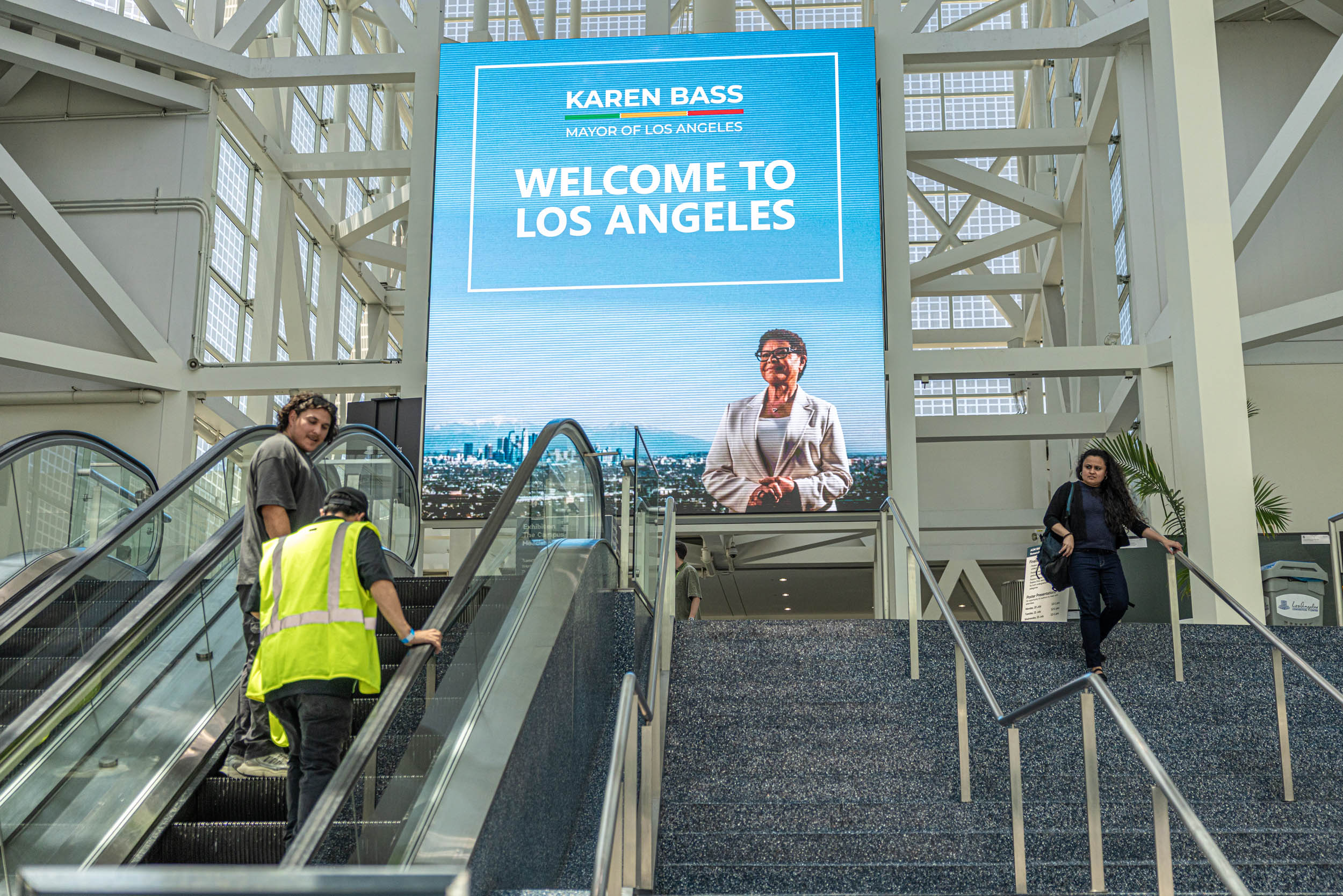
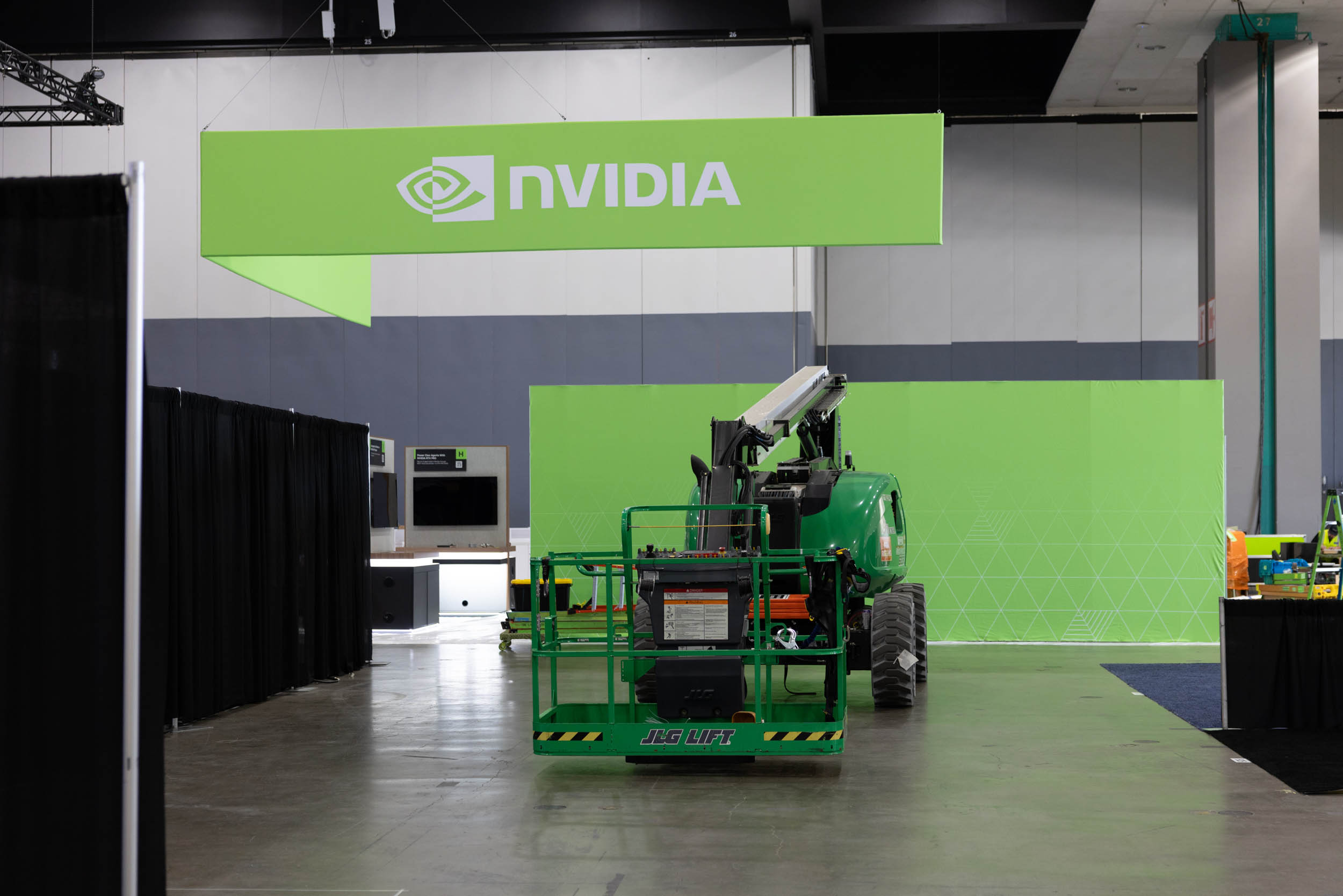
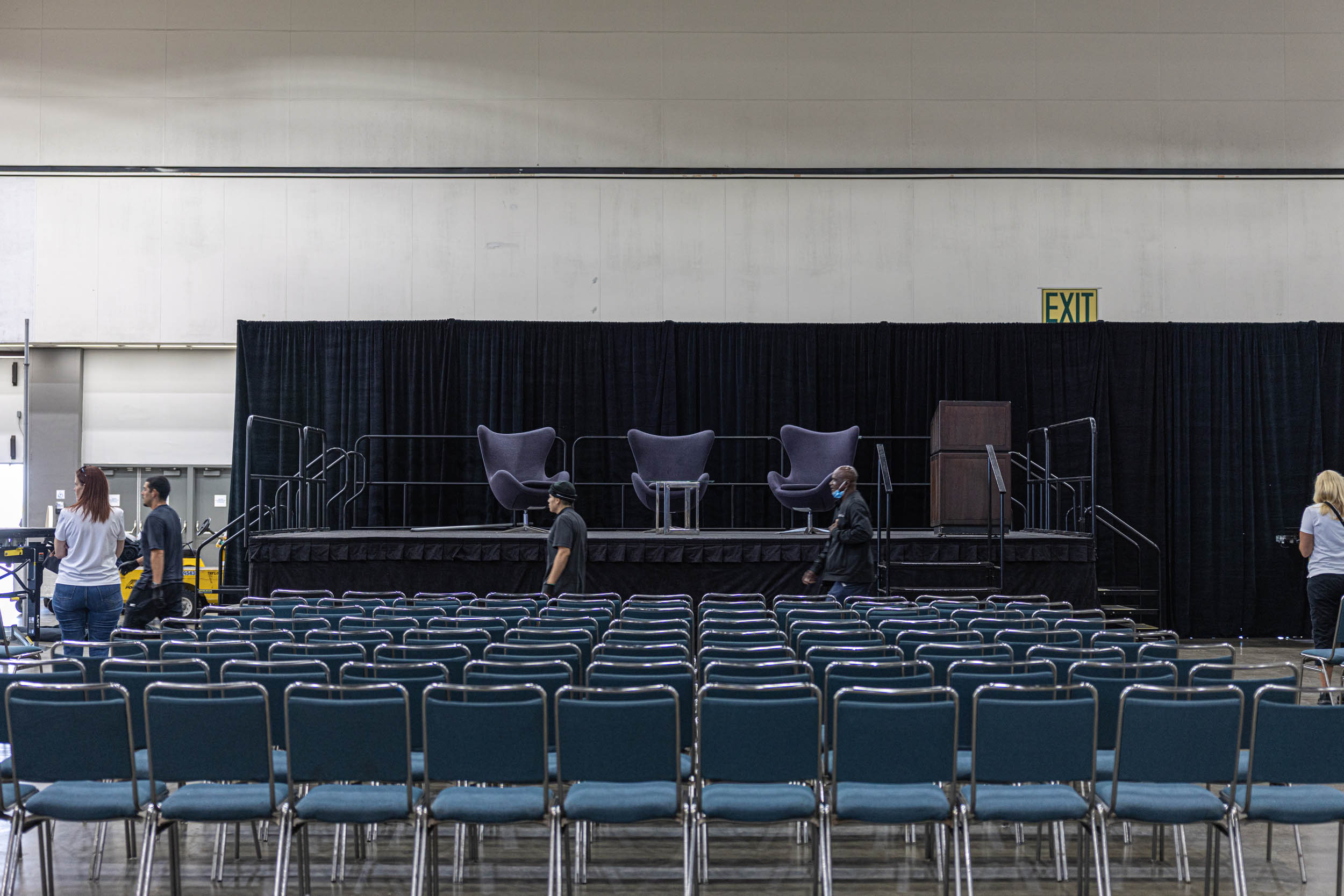
The convention center is ready. I spent part of today walking through it with a camera — up the escalators under a giant screen welcoming me to Los Angeles, past registration counters that are lit and staffed and waiting for no one, past rows of chairs lined up in front of empty stages. Out on the exhibition floor, the last booths are still going up around the crews building them. Tomorrow morning, SIGGRAPH — the biggest computer graphics conference in the world — opens its doors, and this building fills with thousands of people from every corner of the field. Today it is quiet.
Today, the whole place is potential energy.
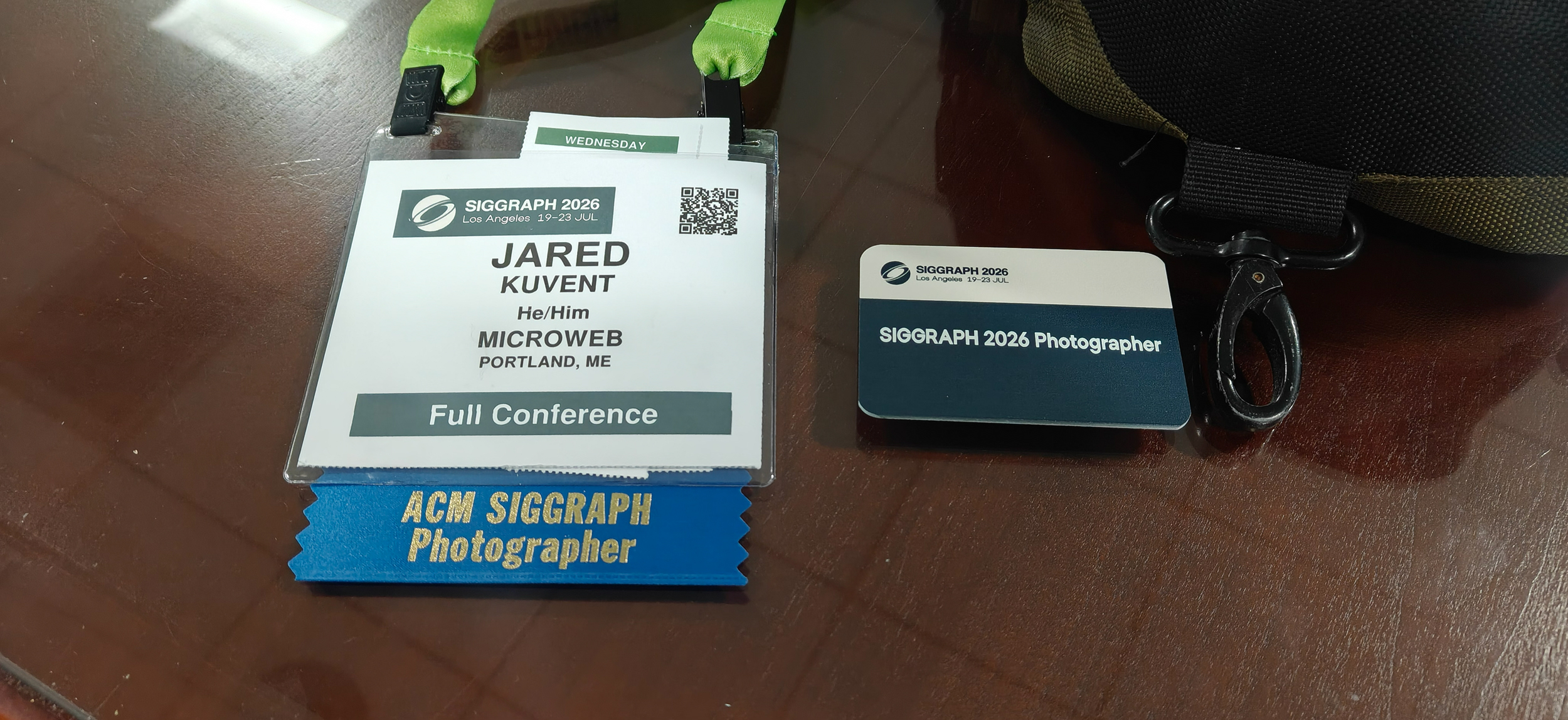
I was here today because I had work to do. This morning I photographed the conference chairs and committees — the volunteer leadership of the entire event, gathered in one place for an inaugural group portrait. My first frames of the week. I am one of the conference photographers this year, and this is the biggest event I have ever photographed. And this afternoon, several boxes that have been riding in my car since Ohio finally came out of the back seat and found their home here.
Four months ago, none of this existed. No assignment. No boxes. No badge with my name on it. I had not been to SIGGRAPH in eighteen years.
The whole thing started with a message.
The message
In the spring, I wrote to an old friend. Dana Plepys ran the SIGGRAPH Video Review for years, spent a four-decade career at a notable visualization lab, and now consults for SIGGRAPH on its history and archives. We had fallen out of touch, so most of the message was the ordinary kind of catching up — how have you been, what are you up to. Then the part I actually wanted to ask: what is SIGGRAPH doing with its archive, especially the animation collection, and how could that material reach more people?
The question had been sitting with me for months. While researching an essay earlier this year, I ended up deep in the history section of SIGGRAPH’s website and was struck by how much is there — decades of records, carefully kept, rich with metadata. My master’s work focused on digital archives and making cultural material accessible. Reading through it all, I kept thinking: more people should be able to find this. It felt like a place I could be useful.
So I asked.
Dana wrote back. The catching up turned into a conversation, and the conversation turned into an introduction to Bonnie, who leads the history and archives team. I offered what I could bring. Bonnie said yes.
That yes grew. A few weeks later I was planning a cross-country drive with a stop in Ohio, at Bowling Green State University, where much of the physical archive lives. I stood in the room that holds it — shelves of a field’s institutional memory, older than my whole career. Then boxes of it were loaded into my car, and I drove them west.
Somewhere in the middle of all that, a second chain started. MK Haley, a longtime conference chair, mentioned that SIGGRAPH was looking for photographers this year and pointed me toward the person who had put out the call. I sent my portfolio. He passed me to Morgan, who coordinates the photography team. A few days of correspondence later, I was on it.
Which is how, this morning, I found myself standing in front of the assembled leadership of the conference, camera raised, asking them to look at me.
None of the steps felt big while they were happening. A message. A reply. An introduction. A portfolio. Each one was small enough to skip — and each one, on its own, would have amounted to nothing. Stacked together, they became a role on the archive team, a media credential, and a car full of a field’s history delivered to its biggest annual gathering. That is the part I keep turning over. The asks were small. What they became was not.
San Diego, 2007
Standing in the empty halls today, I kept having the feeling that I had been in this exact moment before. Not this building — this evening. The one right before.
The first time I attended SIGGRAPH, I was twenty-one. San Diego, 2007. I was a student volunteer — a program that trades a conference pass for working shifts, with hundreds of volunteers from around the world. It was a well-run machine even then: forums where we met before the conference, an orientation, mixers. I had every reason to feel prepared. I still spent my first hours on the floor certain there had been an administrative error, that everyone around me knew something I didn’t.
They didn’t. Everyone in that building was feeling some version of the same thing at different volumes.
That week rearranged my life. The career that followed — Nickelodeon, eventually, and everything after — traces back to it, along with friendships that are still active nearly two decades later. And the thing is, the application to that program had been its own small ask. A form, filled out by a twenty-one-year-old, with no idea what it would become. You never know at the time. That is what makes the pattern hard to trust and worth trusting anyway.
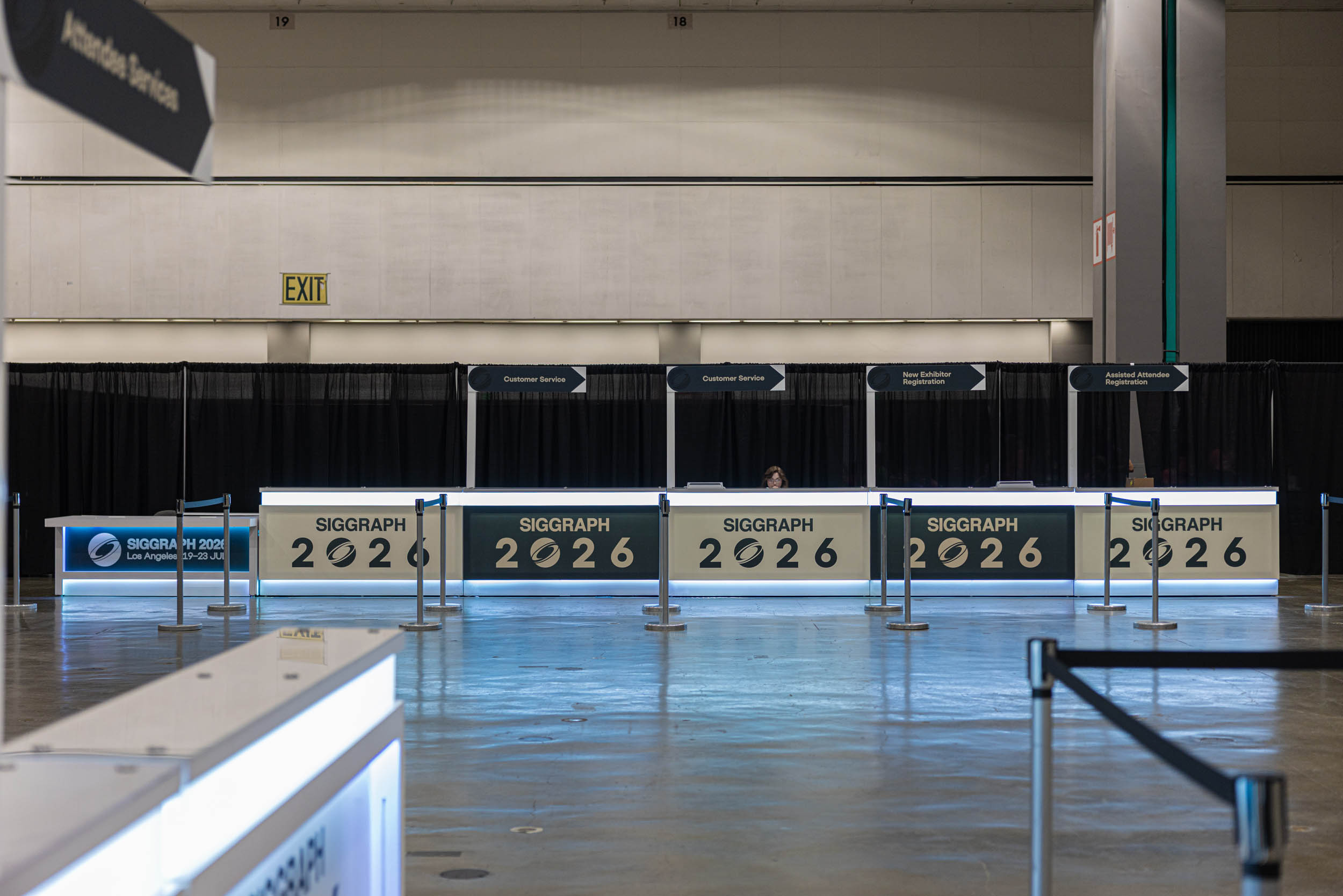
Tomorrow morning, somewhere in the lines at those counters, there will be students picking up their first badge — walking into a building that feels too big for them, carrying some version of the administrative-error feeling. Some of the small asks they make this week will still be unfolding in 2045. None of us will know which ones.
About this series
A note on where this piece sits. This blog began as a travel blog, became the record of building a life in Maine, and this year turned into essays about the animation industry — a series called Losing Each Other, about generative AI and the people it is dividing. That series is on pause; two more essays are drafted and will land after this trip. Showing Up is something different: dispatches written from inside events as they happen, before I know what they mean. This is the first. The next ones will come as the week allows — during the conference if I can manage it, from the road home, and from Maine once the photographs are delivered and the dust has settled.
Tomorrow
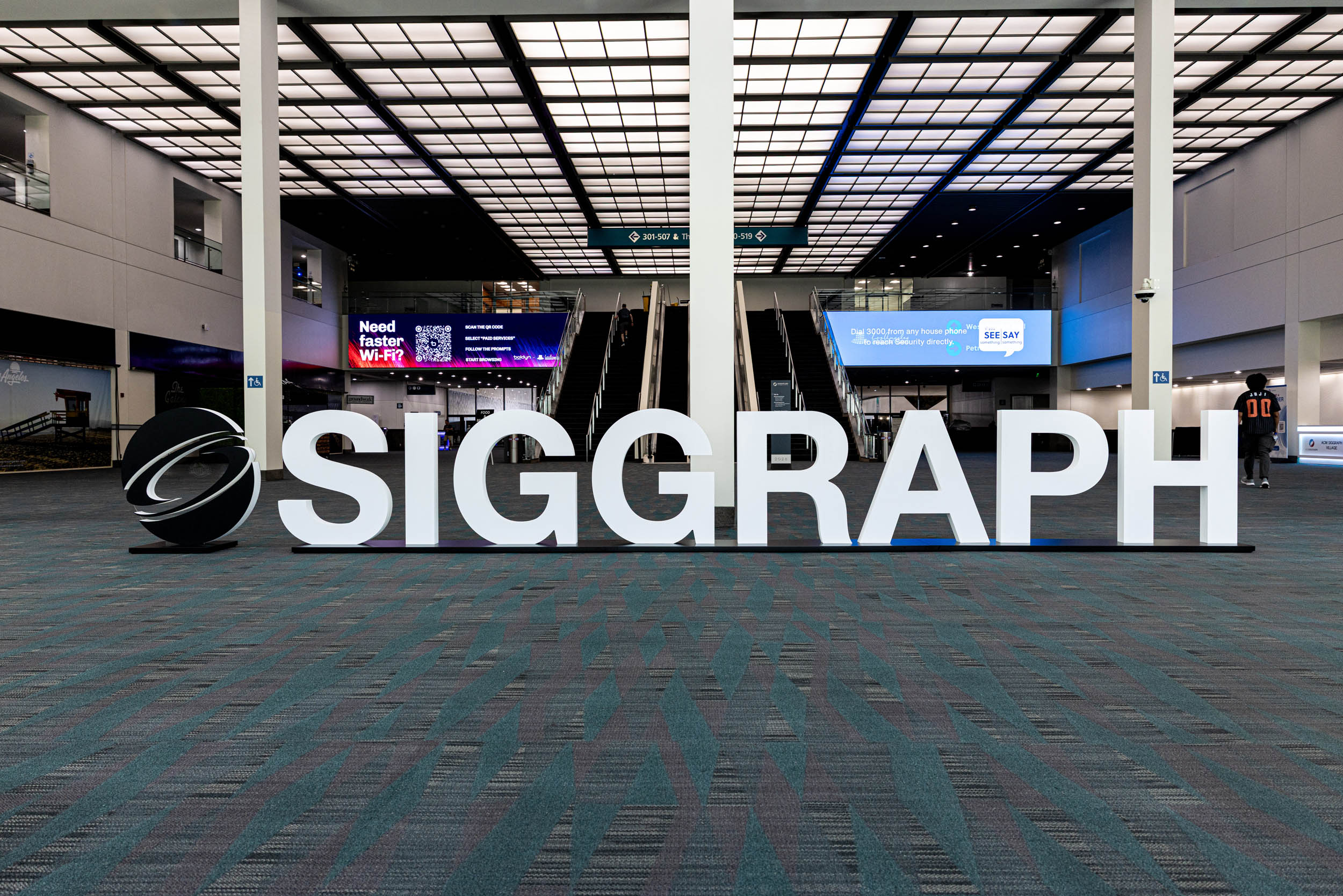
When I left the building today, the big SIGGRAPH sign was standing in the middle of the empty lobby, lit and waiting. That is the picture at the top of this post.
Tomorrow the doors open. The counters get their lines. The stages get their speakers. The quiet I photographed today disappears under thousands of conversations and does not come back until Thursday. Somewhere inside all of it is everything this week is going to turn into — the people I have not met yet, the pictures I have not taken, the outcomes I cannot see from here. All of it is already in the building, the same way the conference was already in those empty rooms today.
Every big thing in this building started small. A message. An application. A question somebody almost didn’t ask.
Tomorrow the room fills.