
Main Crew: An Animator's Letter on Who Counts in Animation
The lanyard
I still have my Nickelodeon lanyard. It sits in a box at the back of a closet in Maine, with other things from those years that I keep meaning to do something with and never do — a McDonald’s Happy Meal toy of El Tigre, a foam sign of CatDog that used to hang above the main conference table at the studio, and a hat, really more of a visor, with a plush raccoon mascot from Lotte World fixed to the front.
The lanyard meant I worked there. The other things in the box are from a different kind of being-there — the kind where you went to a partner studio overseas, or worked with one, and something came back in a suitcase, and you kept it because it stood in for the relationship even when nothing inside the relationship was ever exactly named.
This essay is about the difference between the lanyard and the other things in the box.
The trips
My supervisor at Nick Digital was Ernest. Ernest went to Saerom in Seoul — the South Korean studio that animated Hey Arnold! after season one, and CatDog, and a long stretch of other Nickelodeon shows. He went there for work. There was tooling and pipeline work to handle between the New York office and the Seoul studio.
He came back with the hat from Lotte World, which I described to anyone who asked as kind of like the Korean Disneyland. I had never been there. I do not remember most of what he said about the trip. I remember he liked the food. The hat sat on my desk for years after he gave it to me, and people asked about it, and I told them where it was from, and we all went back to whatever we were doing.

A few years later — by then I had helped found Digital Operations, after a couple of years in Nick Digital — my colleague Kim went on the same kind of trip, to a partner studio in India that did CG pipeline and database work. She came back with a dupatta. I do not remember if she had bought it for herself or if it had been a gift. She said she had loved being there. She said the food was good.
Neither of those trips had a moment, that I can find, where something went visibly wrong. They were good trips. The partner studios were excellent hosts. The work got better afterwards. By any local measure, both visits were successes.
What I think about now, twenty years on, is the shape of how we talked about those studios when our colleagues were not on a trip there. I do not remember many conversations, in our part of the building, where an overseas animator was named individually. The reference was almost always the studio. Saerom is on the next season. Bardel is doing the layout. I am sure people in production, in schedules and reviews, knew individual names. From where I sat in Nick Digital, and later in Digital Operations, we talked about the studio. We did not talk about the people inside it. That is the shape this essay is for. It is the shape that decided the work, and the shape that is about to decide it again.
Where this sits
It is also the shape, I have come to think, that the rest of Losing Each Other has been circling without naming directly. The series got its name from a rupture — the way the AI argument has opened up new kinds of distance between artists and former friends, mentors and protégés, peers who used to agree on what was happening and now do not. That rupture was the first essay’s subject. The second essay took the argument itself head on: the artist coalition calling for an end to scraping, the ethical companies proposing alternatives, the precedents from earlier technological waves about what survives such moments and what does not. I argued there that the coalition is right about the harm and possibly wrong about the answer.
The first essay asked who was in the room. The second asked what we were doing inside our own room. This one asks who our room includes — and, therefore, who our room is deciding for.
Both essays were inside-the-room essays. They were written from within the US animation conversation, by someone inside it, addressed mostly to others inside it. This one is not. This one starts with Ernest’s trip to Seoul and Kim’s trip to India, with the shape of how we talked about Saerom and the Indian studios when our colleagues were not on a trip there, with the lanyards and the boxes and the things in the closet. It works outward from there because I have come to think the conversation inside the room has been missing most of what is happening outside it.
The workforce doing the work the AI conversation is about is mostly outside that room. The credit blocks knew it. The last sixty years of American animation knew it. The numbers the inside-the-room conversation measures with do not — and the numbers being kept by the workers themselves, in their own trade press, in their own language, are telling a story the inside-the-room conversation has not heard.
Before any of that, here is the question I want to offer.
When we say the workforce, who do we mean? When we say us in this conversation, who is in the room? When we say the AI conversation is about us, whose buildings are deciding?
The lanyard is in the box. The hat is in the box. The question this essay is for sits between them.
The credits
Start with the credit block at the end of each show. Sae Rom Productions Co., Ltd. appeared in white text on black, late in the scroll. The Indian studios appeared in the same place, lower. The Vancouver studios came in later in the history of the credit block. The block scrolled past in the few seconds it takes to scroll a block of credits.
The kind of person who reads credit blocks is, usually, an animator. The names at the top of the card — under created by and executive producer — were people the audience might know, who could turn up on a panel. The names in the overseas-services block were names. They were known to one another in the buildings where they worked. To most of the audience, and to most people inside our part of the studio, they were below the line.
They were on the credit block. They were not on the lanyards. They were not in the meetings.
I want to be careful here. The credit block was not malicious. The block was the standard mechanism by which a US production identified its overseas service providers. The structure of it was inherited, not designed, and it was the shape the industry had been using since people in Los Angeles started sending boards to Tokyo in the 1960s.
But the inheritance is not innocent for being old.
Sixty years
Tom Sito, the animator and labor historian who was president of the Animation Guild for fifteen years, has written the only book I know of that traces this history end to end. Drawing the Line, from 2006, is the chronicle of how American animation studios have, since the late 1950s, sent work overseas to bring costs down. [1] Rankin/Bass started outsourcing to Japan in the 1960s. Hanna-Barbera followed in the 1970s — first to Australia, then to South Korea. The Korean industry consolidated around television-animation subcontracting through the 1980s and 1990s; Animation World Magazine called it the Korean animation explosion in 1997, in a piece that read at the time like a celebration and reads now like a description of a system. [2] India’s animation and VFX sector came in next — first as roto, paint, and matchmove work in the 1990s, then as full CG pipeline work in the 2000s. [3] Vancouver came after that.
None of this happened by accident. Each step was a decision made by US studios about where the work would cost less. The decisions all came from one side of the relationship. Each step was met on the receiving end with real growth — buildings, careers, training programs, schools, a generation of artists who built lives in animation. Saerom in 1987. Bardel the same year, in Vancouver. Titmouse in 2000 in Los Angeles, opening a Vancouver branch that, in October 2020, became the first animation studio in Canada to unionize — ninety-eight percent in favor, joining IATSE Local 938. [4]
The system is not new. The workforce is not small. The Indian AVGC sector — animation, visual effects, gaming, and comics — employs more than three hundred thousand professionals. South Korea has over five hundred animation studios. The Philippines has tens of thousands of animation-services workers. The global animation industry employs over a million people.
The credit block was, all that time, what most American viewers knew about any of this. When the next wave hits, whose names will we know?
The number
The CVL Economics report — Future Unscripted, commissioned by the Animation Guild and three other US arts organizations and released in early 2024 — is the number most people in the AI-and-animation conversation are working from. Approximately 118,500 US film, television, and animation jobs are likely to be consolidated, replaced, or eliminated by generative AI by 2026. Twenty-one percent of the sector. [5] It comes from a survey of three hundred US-based studio executives and managers, asked directly what they expect of AI’s impact on the jobs they oversee.
It is a credible number. The methodology is, for what it is, sound. The Harvard Business Review noted in early 2026 that most of the AI-driven layoff wave so far has been speculative. Companies are acting on what they expect AI will do, not on what AI has done. [6] The CVL number sits inside that frame. It is what US studio leaders believed in late 2023 would happen. It has largely been treated as forecast ever since.
What I notice about it now is what it does not measure. The survey is, by design, US.
The missing number
The animators at Saerom are not in the survey. The animators in India are not in the survey. The animators in the Philippines, in Vietnam, in Vancouver, are not in the survey. The methodology does not include them. The reporting does not include them. The trade-press headlines that quote the 118,500 figure do not include them.
I do not say this as a criticism of CVL. They were hired by US guilds to count US jobs. That is exactly what they did. I say it as a point about what becomes legible in the conversation and what does not. The 118,500 is what Hollywood is forecasting will be lost in Hollywood. The receiving end of sixty years of outsourcing is not in the frame.
If you want to read what the receiving end is documenting, you have to read the trade press there. The FICCI-EY 2025 report — the annual Indian media-and-entertainment industry survey produced by the Federation of Indian Chambers of Commerce and Ernst & Young — found that the Indian animation and VFX segment had contracted by nine percent in 2024. The animation sector specifically saw a nineteen percent decline. Indian VFX revenue fell fourteen percent. The reasons given are familiar: the Hollywood writers’ strike, US cost-cutting, the global commissioning slowdown for TV and streaming. But buried inside the same report is a sentence that, when I read it, made me sit up: adoption of AI in areas such as cleaning, colouring, compositing, and other currently manual areas can have a significant impact on outsourcing to India, which could impact jobs. [7]
That sentence is in their own report, in their own language, naming their own workers. It is not in the US discourse around AI in animation in any sustained way. It is in the discourse over there because over there, the wave is already at the building.
The AI conversation has been a US-versus-the-future conversation. The workforce that has done most of the world’s animation labor for thirty years has been treated as a piece of the past whose situation is not the subject. Whose situation has been the subject?
Whose industry
Meanwhile, the next round is being announced. In March of this year, the company Bria — an AI image-and-video startup whose pitch is that its model is trained only on licensed material and that creators receive attribution and compensation for the use of their work — announced at the Hollywood Professional Association’s annual Tech Retreat that it was launching an initiative with major studios and entertainment industry bodies to build a jointly owned AI model. Hollywood would govern the asset. Bria would provide the technology and the attribution infrastructure. Participating studios and organizations would be announced in the coming months. [8] That announcement happened in March. As of this writing, the participating studios and organizations have not been announced.
I want to be clear that the framing of this initiative is exactly what I would have asked for two years ago. Jointly owned. Industry-governed. Licensed material only. Attribution and creator credit. It is, as a frame, the opposite of every legitimate objection the Animation Guild has raised about how the big foundation models were trained. [9] If it works, and if it is genuinely industry-governed by anyone other than the same six US studios that decide everything else in Hollywood, it could be the first real proposal for an ethical generative model that is not just an unenforceable promise.
But.
When I read the Bria announcement and the trade press around it, the industry in question is, again, US. Hollywood would govern the asset. The word Hollywood is doing a great deal of work in that sentence. Hollywood here means roughly six studios — the same six that have made most of the decisions about American animation labor for the last sixty years. Saerom is not Hollywood. Bardel is not Hollywood, even though Vancouver is now where a meaningful share of Hollywood’s actual production happens. The Indian VFX houses that did the cleanup on a hundred US features are not Hollywood. They will not, on the current shape of the announcement, be among the studios governing the asset. They will not be in the room. They will be the workforce the room is deciding for.
A jointly owned AI model trained on Hollywood’s licensed content, governed by Hollywood, attributing Hollywood’s creators, paying Hollywood’s residuals, is a real and important step from the model we have. It is also the next round of the same dynamic, if you read it from the receiving end of the wave the last system put in motion.
Another model would put more people in the room. I do not know what that model looks like, and I do not think anyone yet does. What I know is that the question of whether six US studios get to decide what AI does in animation is a question we have not been asking out loud — and it is the question that will set the precedent for everything that comes after.
Main crew
We had a term at the studio. Main crew. It meant the people who worked at the studio. The full-time staff. The ones who got the lanyards, the holiday parties, the all-hands. There was a credit category for main crew on some of the shows. The main crew was small. The work was made by many more people than that.
I was main crew. Ernest was main crew. Kim was main crew. The animators at Saerom were not main crew. The animators in India were not main crew. The animators at Bardel, when they came in later, were not main crew. They were on the credit blocks. They were not on the lanyards.
What I want to say, and what this whole Losing Each Other series is trying to say, is that the language we use to organize the conversation about who is being hurt by AI is the language inherited from the system that made the show. Main crew. Hollywood. Industry. The 118,500. Each of those words has, built into it, an idea of who counts. Each of them has been, for a long time, accepted by the people inside the line and ignored by the people outside it, because the people outside it were not, in the normal course of things, in the room.
The argument I am making is not that we should expand main crew to include everyone. I do not know what it would mean for the Animation Guild, an American union, to organize Indian VFX workers. I do not think it would be honest to say that the answer is for US-based labor to speak for the offshore workforce.
To be clear, this is not a critique of the Animation Guild. The Guild does important work for the workers it represents, and it has been pushing back on AI for the workers in its bargaining unit longer than most US institutions have. I am not asking it to lead a conversation it was not built to lead. I am saying the conversation has to be larger than any single national union can hold. The Guild is part of it. AnimationXpress is part of it. The workers in every country where the work actually happens are part of it. Right now we are having a US conversation, loudly, while the rest of the conversation is happening elsewhere.
I think the answer is closer to this: when we talk about what AI is going to do to us, the us has to be the workforce that actually does the work. Not the workforce that fits inside the country the union is based in. Not the workforce that fits inside the credit-block hierarchy. The workforce. The full count.
Otherwise the next industry-owned AI model is owned by the same industry that owned the last one, and the next conversation about who has been replaced is the same conversation as the last one. We lose each other again, on an arc that is older and longer than the one we have been arguing about.
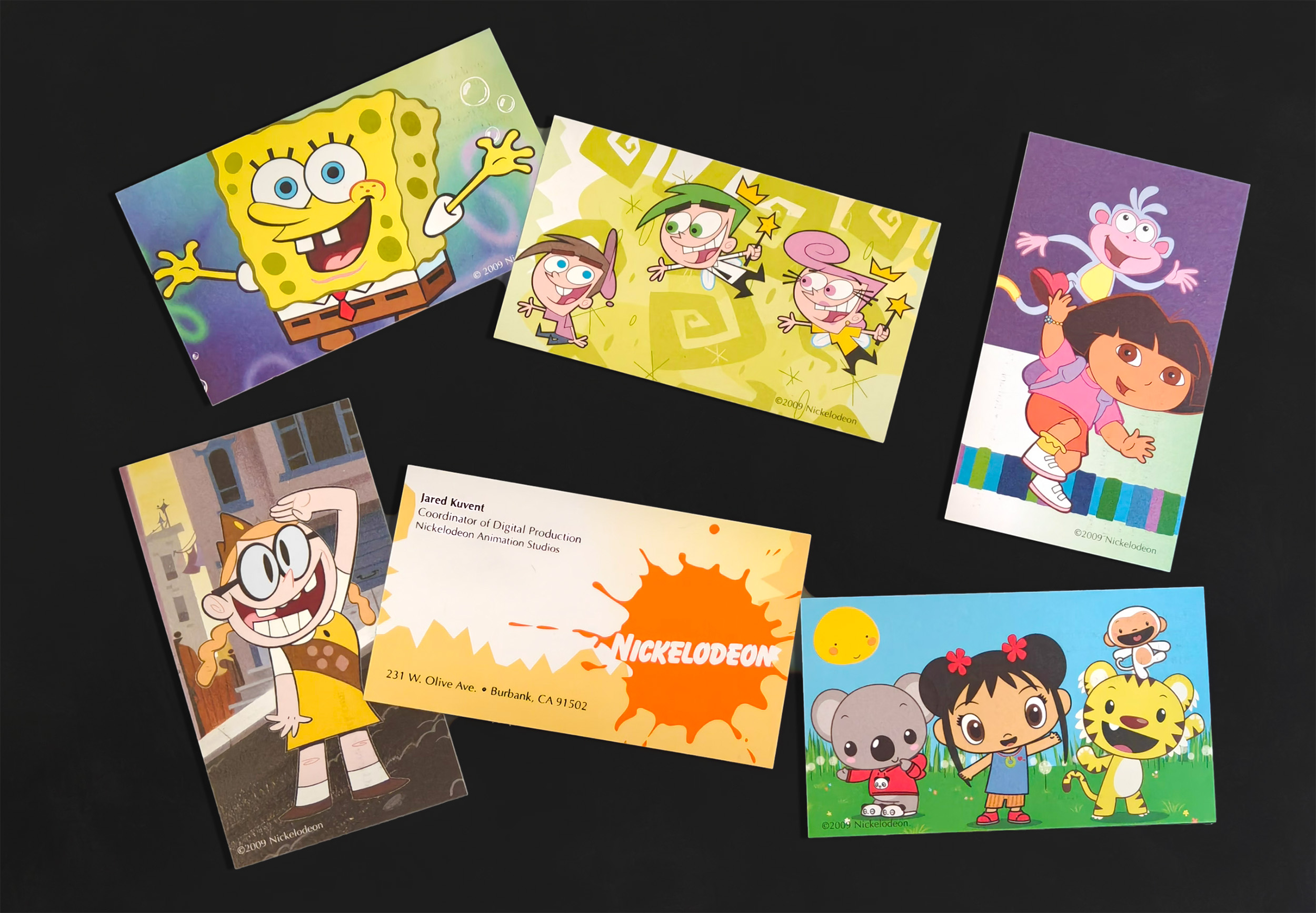
The lanyard is still in the box. It is creased where I used to fold it into my pocket. It says my name. It says Nickelodeon. It does not say Saerom. It does not say the names of the people in India. It does not say Bardel.
That is the question this essay is about. Not whose name is on the lanyard. Whose name is in the room.
Bibliography
[1] Sito, Tom. Drawing the Line: The Untold Story of the Animation Unions from Bosko to Bart Simpson. Lexington: University Press of Kentucky, 2006.
[2] Vallas, Brian. “The Korean Animation Explosion.” Animation World Magazine, no. 2.6 (September 1997). https://www.awn.com/mag/issue2.6/2.6pages/2.6vallaskorea.html.
[3] “Today All Roads Lead to India: The Rise of VFX and Animation in India.” Adobe Substance 3D Magazine, 2023. https://magazine.substance3d.com/today-all-roads-lead-to-india-the-rise-of-vfx-and-animation-in-india/.
[4] International Alliance of Theatrical Stage Employees. “Animation Workers at Titmouse Vancouver Vote to Join IATSE! Historic Moment for Animators in Canada.” IATSE press release, October 8, 2020. https://iatse.net/animation-workers-at-titmouse-vancouver-vote-to-join-iatse-historic-moment-for-animators-in-canada/.
[5] CVL Economics. Future Unscripted: The Impact of Generative Artificial Intelligence on Entertainment Industry Jobs. Burbank, CA: CVL Economics, 2024. https://animationguild.org/wp-content/uploads/2024/01/Future-Unscripted-The-Impact-of-Generative-Artificial-Intelligence-on-Entertainment-Industry-Jobs-pages.pdf.
[6] Hatzius, Jan, and Aatif Sumar. “Companies Are Laying Off Workers Because of AI’s Potential — Not Its Performance.” Harvard Business Review, January 2026. https://hbr.org/2026/01/companies-are-laying-off-workers-because-of-ais-potential-not-its-performance.
[7] AnimationXpress Team. “FICCI EY Report 2025: Indian Animation Sector Sees 19 Per Cent Decline.” AnimationXpress, March 2025. https://animationxpress.com/latest-news/ficci-ey-report-2025-indian-animation-sector-sees-19-per-cent-decline/.
[8] Bria AI. “Bria AI Receives Two HPA Awards Recognizing Ethical Innovation and Transformative Impact on the Entertainment Industry.” Bria.ai blog, March 2026. https://blog.bria.ai/bria-ai-receives-two-hpa-awards-recognizing-ethical-innovation-and-transformative-impact-on-the-entertainment-industry.
[9] The Animation Guild. “AI and Animation.” The Animation Guild, IATSE Local 839, 2025. https://animationguild.org/ai-and-animation/.
Additional Sources
Ferguson, Matt. “Once Upon a Time in Korea.” Life in the Machine (Substack), 2024. https://lifeinthemachine.substack.com/p/once-upon-a-time-in-korea.
Hipes, Patrick. “Animators at Titmouse Vancouver Join IATSE to Become First Canadian Animation Studio to Unionize.” Deadline, October 8, 2020. https://deadline.com/2020/10/titmouse-vancouver-animation-studio-iatse-union-vote-first-canadian-studio-1234600790/.
AnimationXpress Team. “Animation Industry in Flux: How India’s Leading Studios Navigated a Tumultuous 2025 and Prepare for a Transformative 2026.” AnimationXpress, January 2026. https://www.animationxpress.com/latest-news/animation-industry-in-flux-how-indias-leading-studios-navigated-a-tumultuous-2025-and-prepare-for-a-transformative-2026/.
AnimationXpress Team. “FICCI EY Report 2026: Indian VFX Segment Recalibrates to Reach Rs 48 Billion Revenue.” AnimationXpress, March 2026. https://www.animationxpress.com/latest-news/ficci-ey-report-2026-indian-vfx-segment-recalibrates-to-reach-rs-48-billion-revenue/.
Bardel Entertainment. “About.” Bardel Entertainment corporate website, 2025. https://bardel.ca/about/.
Canadian Broadcasting Corporation. “Vancouver Animation Workers Unionize After Precedent-Setting Vote.” CBC News, October 8, 2020. https://www.cbc.ca/news/canada/british-columbia/vancouver-animation-workers-unionize-after-precedent-setting-vote-1.5772783.
McClintock, Pamela, et al. “Hollywood Animation, VFX Unions Fight AI Job Cut Threat.” Context News / Thomson Reuters Foundation, 2025. https://www.context.news/ai/hollywood-animation-vfx-unions-fight-ai-job-cut-threat.
Tung, Sam, et al. Artificial Intelligence and Animation: A Survey of the Animation Guild Membership. Burbank: The Animation Guild, IATSE Local 839, 2025. https://animationguild.org/ai-and-animation/.