
Showing Up: The Cat Who Crossed the World
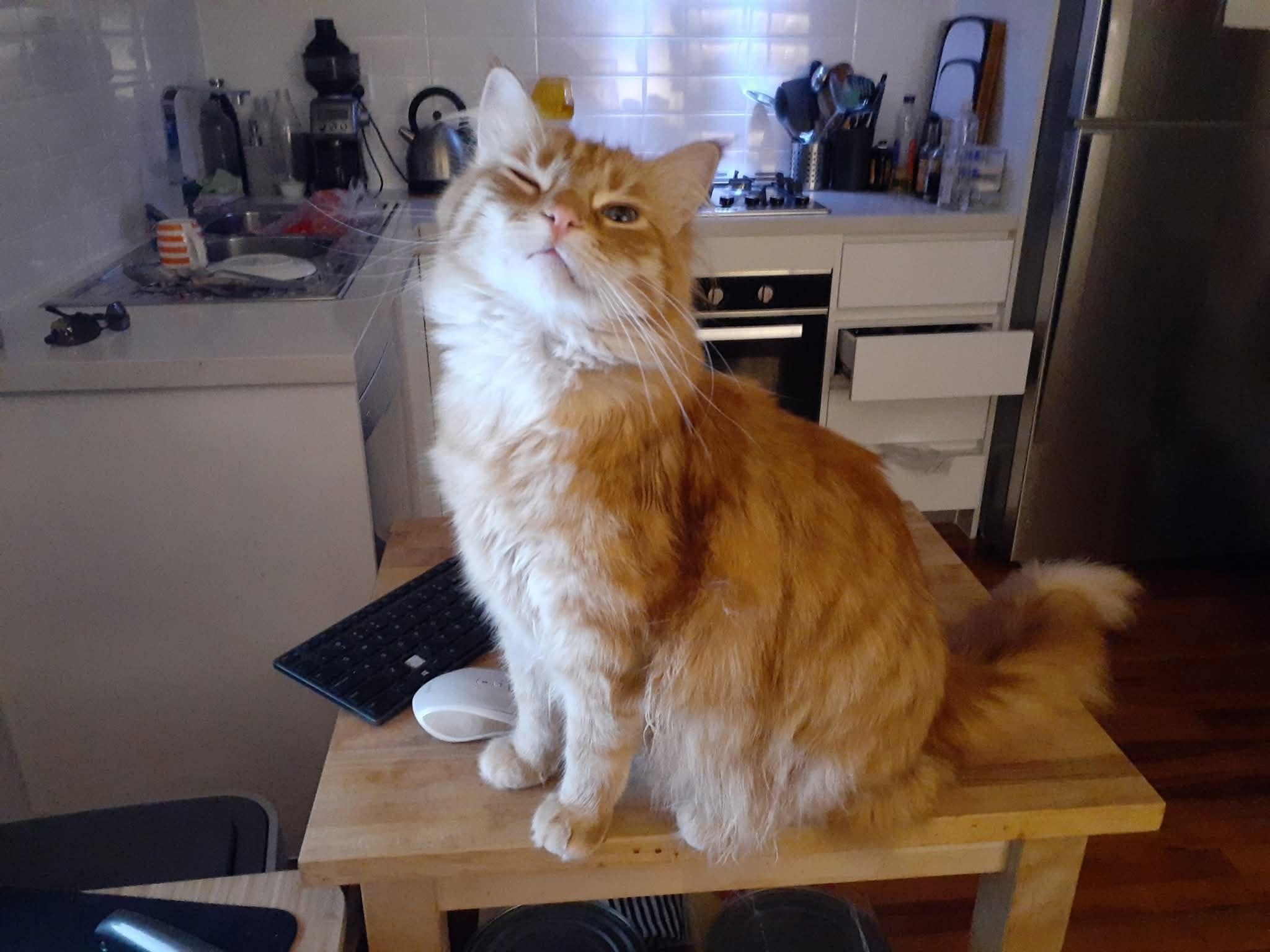
Most cats get one house. One couch, one window, one lap, a handful of people whose names they’d recognize if cats admitted to recognizing names. It is not a small life — no life with love in it is small — but it is a life the size of a living room.
Hobbes got more. He was born in Australia, adopted out of a shelter before his first birthday, and spent the next eleven years living the way most of us only claim we want to: two continents, an ocean crossing, multiple cities, an entire country traversed more than once, and a supporting cast of family, friends, and readers on both sides of the planet who knew him — actually knew him, by name, by personality, by reputation.
He died today, while I was still days from home, driving back from the other side of the country. I found out in a parking lot off an interstate exit in Louisiana. I’ll get to that. But that is not what this piece is about.
This is about the fullest life I’ve ever watched a cat live. I was lucky enough to be the person he lived it with.
Nacho
I found him online, the way you find things now. I had always wanted an orange cat. My foster brother had one when I was growing up, and that cat was awesome in the way certain childhood animals are permanently awesome, and somewhere in those years it settled in me as fact: someday I’d make friends with an orange cat of my own.
So I drove out to meet him. The shelter had three cats that day. A black longhair with a friendly, easy personality. A second guy who was bouncing off the walls with somewhere important to be. And then a small orange cat named Nacho, who let me pick him up and was instantly, completely comfortable in my arms — as if the interview were a formality and he’d already seen the paperwork.
I knew immediately. He came home with me that day.
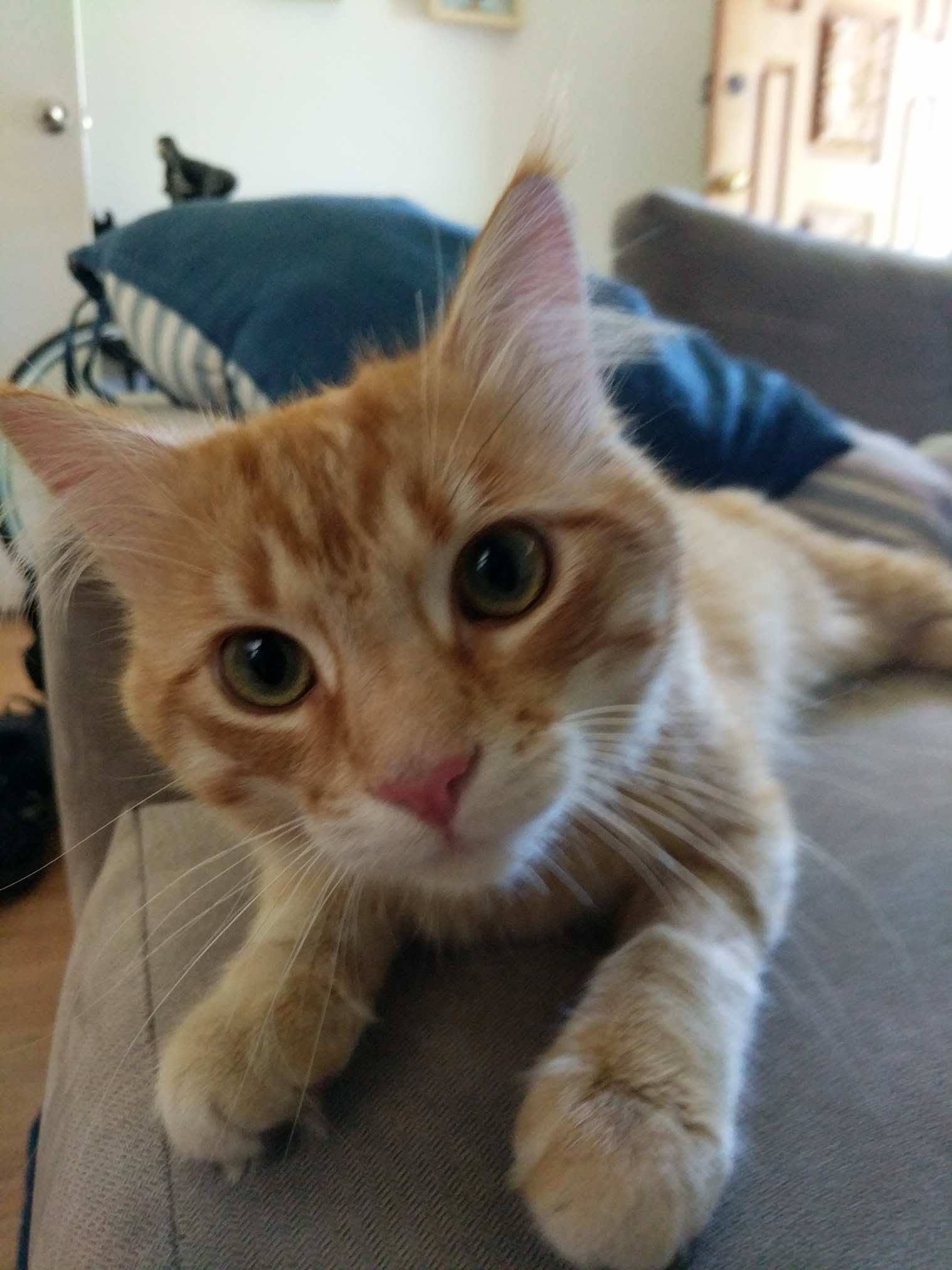
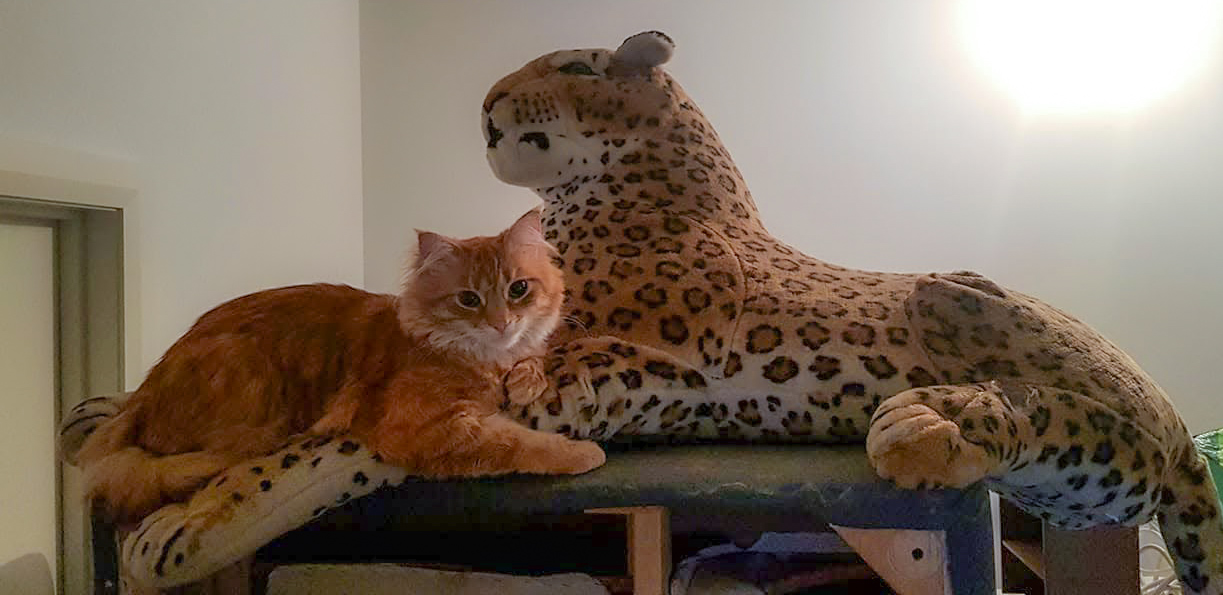
Nacho became Hobbes, named for the best friend a boy ever drew — the tiger who was realer to one person than anyone else could see. Years later someone photographed him lounging beside a giant plush leopard, both of them in the same pose, and the name explained itself.
The world
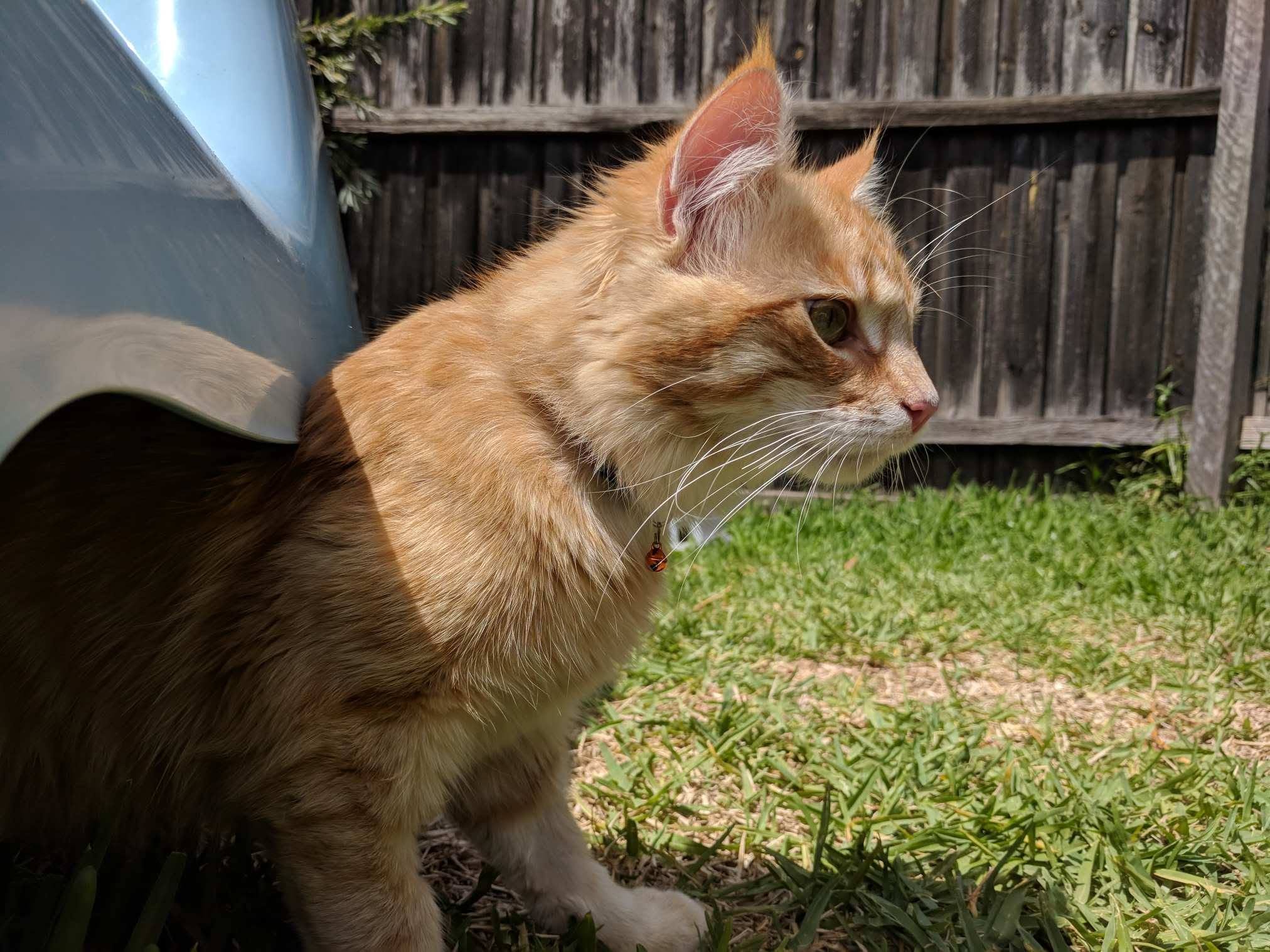
The shelter was just outside Melbourne, and for his first years Hobbes was an Australian. He had a backyard with a wooden fence and long grass, and a little collar with a ladybug bell, and a neighborhood. My friends Mitch and Mike lived close by, and they were there within days of the adoption — from the beginning, Hobbes wasn’t just mine. He was family to people who had no obligation to love him and did anyway. Whenever I had to be somewhere else, I never once worried. You don’t worry about a cat who has his own people.
When my time in Australia ended, there was never a question. Hobbes crossed the Pacific Ocean — a shelter cat from outside Melbourne, arriving in America with more international travel behind him than most people I know. Then he kept going. City to city, coast to coast, apartment to apartment, until we landed in Maine. The furniture changed. The coastlines changed. Hobbes walked into each new place, performed a full inspection, decided where the couch ought to be, and made it home. Home, for eleven years, was not an address. It was wherever the orange cat was.
His people
Here is a thing I learned tonight, counting: Hobbes had more people than most cats get in nine lives.
There were my mom and my brother, who looked after him when I traveled in his early years — and who discovered a Hobbes I’d apparently never met. With me, he was not a lap cat. Never once. With them, I’m told, he spent hours at a time curled in a lap like it was his job. He had different rules for different people, and he never explained the system, and I respect it to this day.
There was Luke, my roommate in Maine — his second person, full stop. When I left for weeks at a time, “Hobbes duty” was the phrase, but it was never duty. The two of them had their own household rhythms, their own understandings. When I wrote, last fall, about the night Luke and I cleaned the apartment back into place, it was Hobbes who delivered the final verdict — pacing the freshly washed floor, inspecting our work, then settling down with a single approving flick of his tail. Nothing in that apartment was finished until Hobbes said it was finished.
And there were the readers. If you’ve followed this blog, you’ve been in a room with him whether you knew it or not. He was in the first post I ever published. He was asleep on the back of the couch at 11:47 PM in the piece where I introduced the projects I’ve been building — present, as he always was, for the making of everything. He had opinions about everything and offered them constantly, and some of them made it into print.
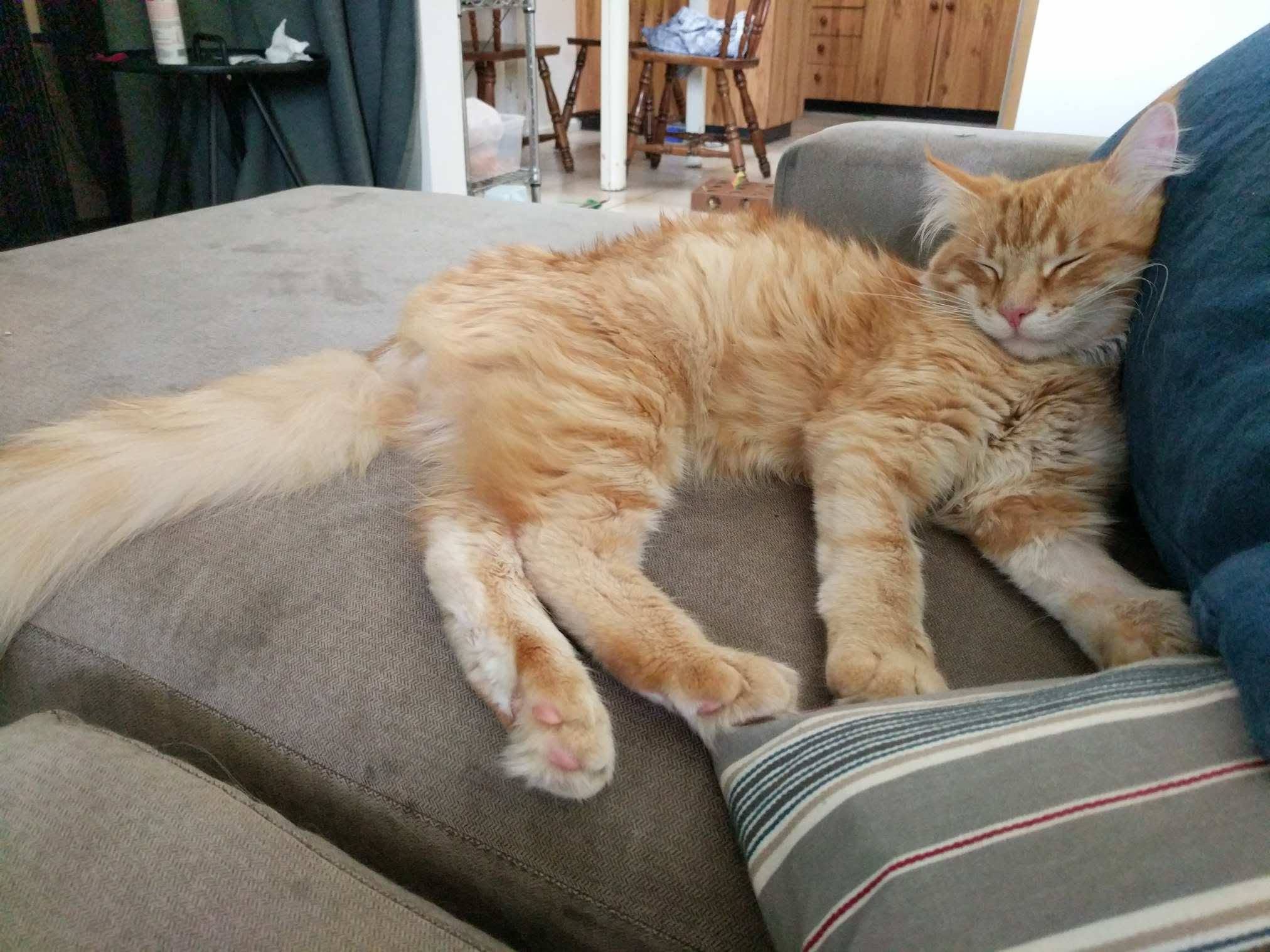
Tonight, within hours of the news, more than forty people had responded to his picture with love — from three countries, from every chapter of my life. Some of them met him in person. Some only ever met him in writing. All of them knew exactly who he was. That is not a normal amount of world for one cat to have touched. That was Hobbes.
The two of us
With me, he was not a lap cat, but he was mine in every other way a cat can be. I picked him up for kisses whenever I wanted, which was often. I grabbed him in bed for cuddles against his will — a crime he tolerated for eleven years without ever officially dropping the charges. He supervised everything I built from the back of the couch. He was the constant through every move, every country, every chapter, every version of my life through the entirety of my thirties. The one detail that never changed.
And between us, over eleven years, we built a pattern.
I left sometimes. A weekend, a month, seven weeks on the road. He stayed with Luke, or with family, always with his people. And every single time, I came back — and he met the coming-back with a ritual he invented himself: a few days of staying extra close. Following me from room to room. Sleeping nearer than usual. Making sure. In the first post I ever published on this blog, leaving for the first big road trip, I wrote that the hardest part was knowing he wouldn’t be *”sitting by the door when I come home at the end of each day.”* Seven weeks later I came home, and there was the door, and there was the ritual, and the pattern held.
It held for eleven years. Two continents. Eight crossings of this country. Not one exception.
The day
An hour and a half from Baton Rouge, my phone rang. It was Luke, and I knew from his voice before I knew from his words. He had found Hobbes in my room, unresponsive. Gone.
I heard myself saying no, no, no, and took the next exit, and stopped the car in a Burger King parking lot, and came apart in a place that had nothing to do with either of us. I pled — please, please, please — as if pleading could change it. There were no tears at first, only sobs. Then the tears came like Niagara Falls. For five minutes I couldn’t reach a single person I love. Then my mom called, and I got the words out on the second try — *”Hobbes died”* — and she comforted me until I could breathe, and then, because she and I have done hard days before and know how to triage, we made the arrangements together, over the phone, from a parking lot.
Had I known, I would never have taken this trip. Nothing on any road is worth it. That is simply the truth, and I won’t dress it as anything else.
But I will hold the other truth beside it: he was home when it happened. My room. The place he knew best, in the middle of the life we built, with his second person down the hall. He was not somewhere strange. He was exactly where Hobbes belonged.
The door
Tomorrow I get back in the car, because the only way home is through. In a few days I’ll park outside the apartment, carry my bags up the stairs, and walk through the door after the longest time away — the exact moment the two of us were best at. The surprise. The reunion. The extra-close days of making sure.
I don’t know what the apartment sounds like without him in it. I’m not looking forward to learning.
Eleven years, he kept his half of the pattern. The waiting, the greeting, the days of making sure — that half was always his, and he never missed. And I kept mine. Every trip, every country, every absence, I came back.
He knew I always come back.
He just couldn’t wait this time.